

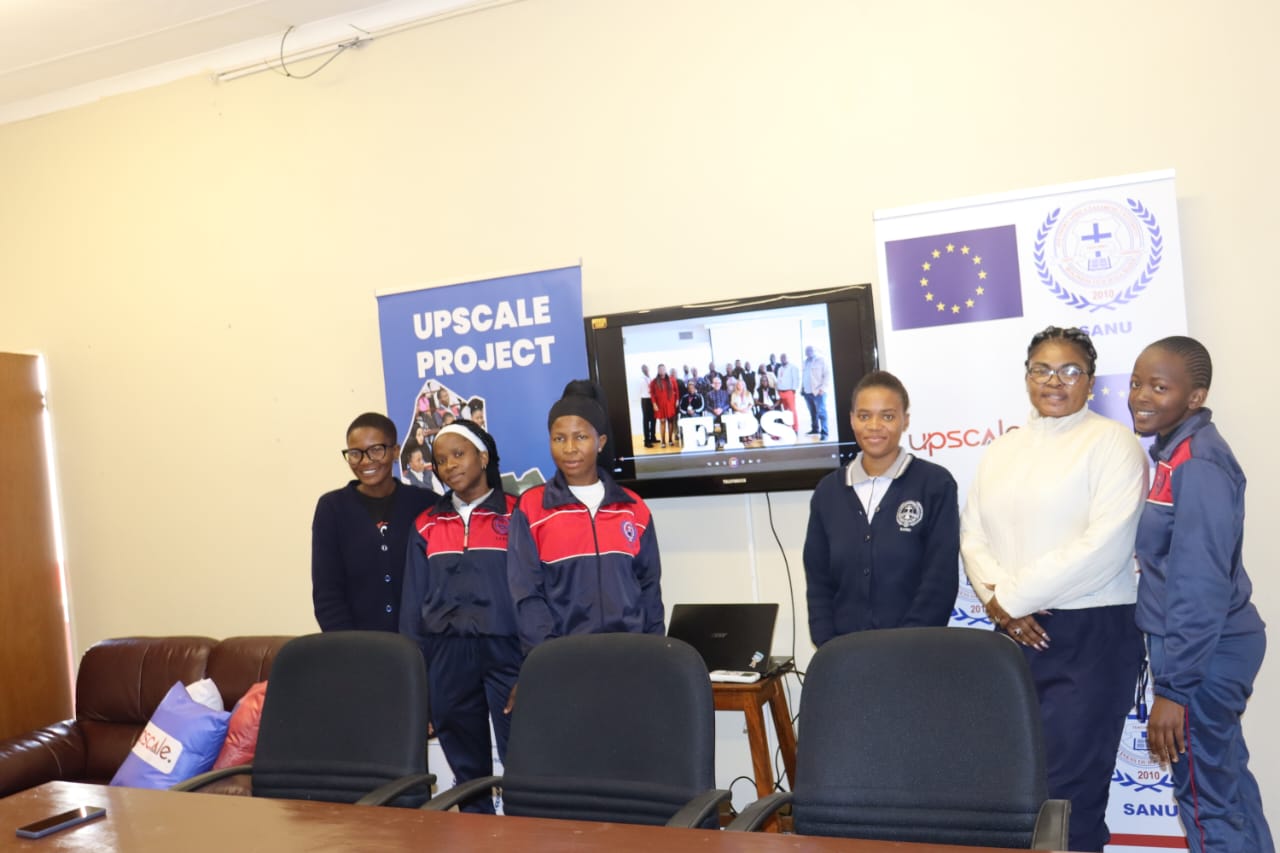
This UPSCALE research project seeks to reform the education sector through implementation of dual higher education system, by addressing mismatches between the requirements of the labour market and institutions of higher learning, to enable employability and tracking processes of graduates. Aligned with the European Union’s strategic priority of relevance of education,
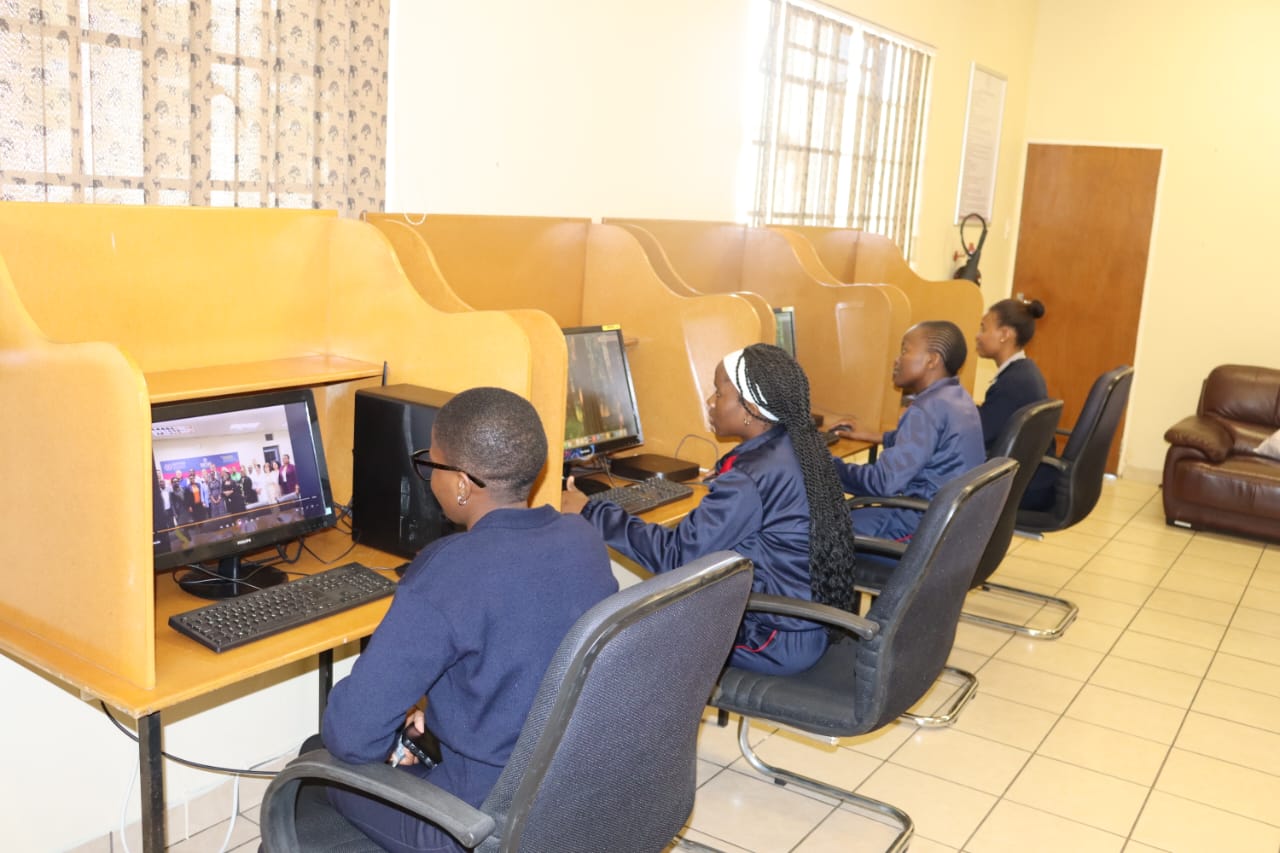
the project brings together multidisciplinary expertise and cross-sector partnerships to generate impactful and scalable outcomes across participating regions.
With this dissemination report, Southern Africa Nazarene University (SANU) outlines the project’s knowledge-sharing activities in order to increase awareness and strengthen institutional collaboration.
To operationalize and digitally consolidate the University Career Guidance Centre as a visible, accessible, and sustainable institutional unit in accordance with WP3 – T3.1, ensuring structured provision of career counselling, employability services, and stakeholder engagement.
To create and maintain an online demand–supply matching platform (jobs and internships bank) that facilitates structured interaction between students, graduates, and employers, thereby strengthening labour market integration and increasing graduate employment opportunities.
To provide the digital infrastructure necessary for the implementation of Graduate Tracer Studies under WP3 – T3.4 (Year 3), including:
To support the development and piloting of Dual Higher Education programmes under WP4 by:
To digitally facilitate alumni engagement, mentorship schemes, employer partnerships, and industry collaboration, reinforcing sustainable university–industry linkages beyond project duration.
To enrich and advance the legislative and normative framework on Higher education & graduates’ employability at the national and institutional levels in Botswana & Eswatini ; This calls for all stakeholders involvement…( The government, ESHEC for the coordination..
To guarantee compliance with Erasmus+ visibility requirements and to ensure that the UCGC Webpage remains an operational, regularly updated institutional tool beyond the lifetime of the UPSCALE project.
To strengthen the capacity of Botswana & Eswatini` HEIs staff to develop and release graduates’ employability tracking, to deliver efficient career guidance services and promote the professional insertion of students and graduates in the labour market.

The SCSC is guided by institutional core values, which among other considerations, evidently subscribe to the following Value Statements as core driving factors:



1. Strong Legal and Policy Frameworks – Government support through legislation, funding mechanisms, and regulatory recognition provides an essential enabling environment.
4. Credit-Bearing Workplace Learning – Workplace experiences are central to degree attainment, carrying substantial credit weighting (25-50% of programme) and formal assessment aligned with learning outcomes.
6. Data-Driven Quality Assurance – Systematic tracking of employment outcomes, employer satisfaction, and graduate feedback creates evidence-base for continuous improvement. Data integration into accreditation and institutional planning ensures accountability.
2. Formalised Partnership Structures – Success requires Tri-party agreements (university-employer-student) with clear roles, responsibilities, assessment criteria, and intellectual property provisions which create accountability and sustainability.
5. Credit-Bearing Workplace Learning – Workplace experiences are central to degree attainment, carrying substantial credit weighting (25-50% of programme) and formal assessment aligned with learning outcomes.
3. Formalised Partnership Structures – Success requires Tri-party agreements (university-employer-student) with clear roles, responsibilities, assessment criteria, and intellectual property provisions which create accountability and sustainability.
6. Comprehensive Student Support – Dedicated career development units provide placement coordination, counselling, skill development workshops, employer relations management, and problem-solving support throughout workplace learning experiences.
7. Technology Infrastructure – Digital platforms manage logistics (placement matching, documentation), facilitate communication, enable data collection and analysis, and provide transparency for all stakeholders.





This Action Plan of the SCSC is aligned with Southern Africa Nazarene University Strategic Plan and Priorities and the broader national development agendas in Eswatini. By making efforts to create links between the university, graduates, and employers, the university, through its SCSC, does not only contribute to improving graduate employability, but also supports Eswatini’s broader national development agendas. In essence, the services facility plays a key role in ensuring that SCSC and employability services are consistent with:
Institutional Strategies – Reinforcing the universities’ missions, to provide high-quality education, strengthen student support services, and enhance the visibility and impact of graduates on the labour market.

The SANU Career Services Centre supports government objectives on education, skills development, youth employment and digital transformation. In addition, SCSC highly complements policies aimed at reducing unemployment, fostering entrepreneurship and building resilient human capital. The programmes offered in the SCSC are very special and contemporary in nature, because they are located in those critical areas sought in the country, like: Entrepreneurship and Innovation, Information Technology, Psychology, Guidance & Counselling, etc. (A closer assessment also shows that these are areas which of late are of global concern), if the National Skills Audit Report of 2022 is anything to go by. The said examples are considered as special about SCSC programmes, in that they aim at addressing the present deficits needed by employers in the labour market, identified in the country, especially as published by The Ministry of Labour & Social Security and The MoET’s National Education and Training Sector Policy of 2018, and also identified by the National Labour Market Skills Project (NLMSP), whose aim is to evaluate the current skills landscape in Eswatini, as in identifying gaps between education outcomes and labour market requirements. Deficits identified in students and graduates gave interests and motivation towards the establishment of this SANU Career Services Centre and the programmes offered